
How to Find Lincoln Residents
A Lincoln residents directory search works best when the first record matches the question. An address usually belongs in county property records. A name can be checked in VoterView, a court index, or a deed record, depending on what needs confirmation. Older questions often move to the library. Each source has a narrow purpose, so label a result as ownership, registration, court participation, or a dated historical snapshot instead of treating every name hit as the same fact.
Start with a fact you can test. The assessor links an owner to a parcel and tax mailing address. VoterView confirms a named registration result, not a whole household. Recorded documents identify people connected with a transaction. Lincoln City Libraries adds dated directory entries, newspapers, and yearbooks. Those separate layers make a sturdier Lincoln residents directory trail than any single search.
- Search the Lancaster property search by name, address fragment, or parcel ID and keep the situs, mailing address, and PID separate.
- Use Nebraska VoterView with first name, last name, and Lancaster County for a registration question.
- Check the Register of Deeds index for grantors, grantees, and recorded instrument dates.
- For an older name or address, consult the directories and newspapers at the Bennett Martin Local History Center.
- Ask the actual custodian a narrow question when the online result ends before the needed era.
Note: A missing Lincoln result can reflect a spelling variation, a protected record, or an index gap rather than a conclusion about a person.
Lincoln Resident Records Offices
Lincoln is also the Lancaster County seat, so several useful resident records are concentrated in county and city offices. The Assessor/Register of Deeds pair supplies the strongest address trail: the assessor connects a parcel to present assessment fields, while the recorder preserves deeds, mortgages, liens, plats, and related instruments. The Election Commission handles the local voter-list process. These are separate custodians with separate rules, even when a record begins with the same name.
Lancaster County Recorder / Register of Deeds
555 S. 10th Street
Lincoln, NE 68508
402-441-7463
Lancaster County Treasurer
555 S. 10th Street, Room 102
Lincoln, NE 68508
402-441-7425
Lancaster Election Commission
601 N. 46th Street
Lincoln, NE 68503
Office details online
For a full address-by-address chain, the Lincoln by-street directory uses the assessor and GIS records in more detail. The office cards are an orientation point, not a substitute for current office notices.
Lincoln Property Records by Name
The Lancaster County Assessor/Register of Deeds Property Search is a useful first stop when a name, address fragment, or property identifier is already known. Its quick search can search owner names, street names, and legal descriptions together. That is useful for a broad first pass, but a street word can also appear in a legal description. For a focused result, use Advanced Search and combine the street field with a number range, city, ZIP code, neighborhood, or property status.
| Lincoln assessor field | Question it helps answer | Format note |
|---|---|---|
| Owner name | Find assessed property tied to a name | Use Last, First; a surname alone is broad |
| Street name and number range | Focus on a road or part of a block | Use the abbreviated road type |
| ZIP code or neighborhood | Narrow a property set | Combine with another field when possible |
| PID | Connect a parcel with deed and map work | Dashed and undashed forms are accepted |
| Subdivision, block, lot | Bridge a legal description to a parcel | Useful when an old deed lacks a street number |
The parcel record separates a property situs from its tax mailing address. A mailing address can point to the tax-statement recipient, but it may belong to a business, relative, lender, or other contact. It should never be relabeled as residence without another suitable record.
The assessor search screen shows the starting fields used for this Lincoln residents directory layer.
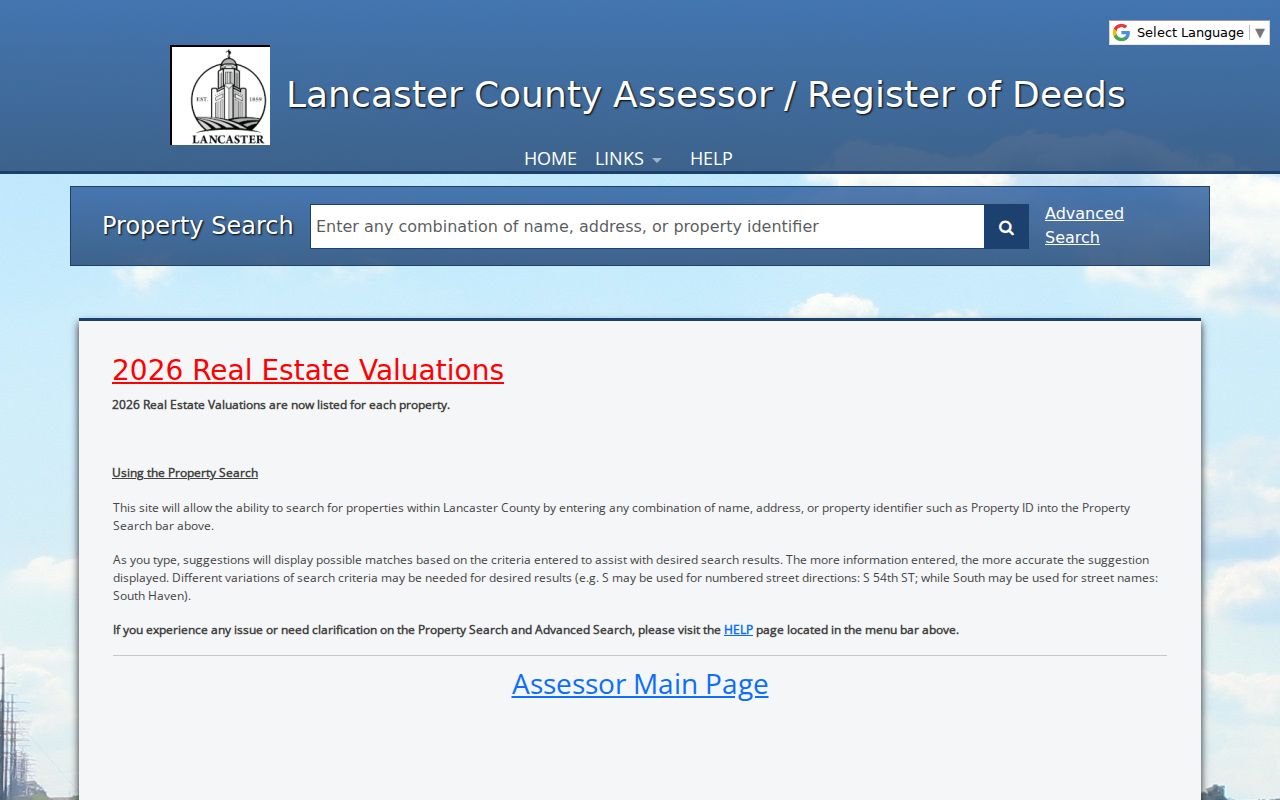
Advanced fields provide a way to narrow an owner or address result before moving to a deed, map, or historical source.
Lincoln Deed Records After 1987
The recorder's electronic index has a clear dividing line: it covers documents filed on or after June 19, 1987. Searchers can use grantor, grantee, either-party, instrument number, document type, and date fields. Exact name mode expects last name first, while Advanced mode is less dependent on order. An asterisk wildcard can help with a name variation. The resulting instrument is evidence of a recorded transaction or encumbrance, not a current-residence finding.
Earlier deeds did not disappear. Lancaster directs researchers to handwritten index books, book-and-page archives, and microfilm. The online index is public to search; post-1987 document images are available to registered users, while earlier images require the separate archive route or office access. This local distinction between a search result and a source copy is vital to a careful Lincoln residents directory trail.
The recorder portal identifies the electronic-index cutoff and public-login route. When a current name reaches the cutoff, the parcel legal description and book-page references guide the next search at the archive or counter.
Current Lincoln Resident Directories
No single current Lincoln residents directory lists every person. Official sources answer narrow questions: an owner, a registered voter, a recorded party, a court party, or an association contact. Keeping those roles distinct helps prevent an ownership record from being read as a household list. The city neighborhood map can identify an association boundary or contact path, but it does not establish who belongs to a group.
| Lincoln source | Resident-related fact | Custodian | Access route |
|---|---|---|---|
| Assessor parcel record | Assessed owner, parcel, situs, tax mailing address | Lancaster Assessor | Free Orion or GIS search |
| VoterView | Named registration and polling information | Nebraska election system | First name, last name, county |
| Recorder index | Parties to recorded land documents | Register of Deeds | Public index; images vary by era |
| JUSTICE | Public court-party and case process information | Nebraska courts | Remote search, kiosk, or clerk route |
| Neighborhood map | Association boundary and public contact path | City Urban Development | Address or association search |
A person-specific check needs careful comparison of independent anchors. The Lincoln resident lookup route distinguishes a parcel result, voter result, court case, and historical entry before treating them as a match.
Lincoln Voter Records and VoterView
VoterView is a confirmation tool, not a browseable household roll. It requires a first name, last name, and county for a registrant search, or a residential location for a polling-place search. Nebraska law allows certain register fields, but confidential and private information is withheld. A countywide or precinct-level list follows a different route through the Election Commission and carries an oath and statutory use limits. Distributed lists cannot be posted online or used commercially.
The local request form permits email, fax, mail, drop-box, or in-person submission and asks for at least one business day before pickup. That channel can be more appropriate than trying to turn one VoterView result into a street roster. A protected or absent name is not a signal to pursue information elsewhere.
Lincoln Court Records at a Kiosk
JUSTICE is the statewide county, district, and juvenile court information system used for Lancaster searches. A one-time name search costs $17 and returns up to 30 records. General subscriber searches can filter by party name, court type, case type or subtype, county, year, judge, and attorney. A case entry is a procedural record, not a conclusion about a person.
Remote access is not the only channel. Lincoln City Libraries provides in-library JUSTICE and SCCALES access, and courthouse or library kiosks are a fallback when the remote search is incomplete. Narrowing by court and year can avoid same-name confusion.
The official JUSTICE name-search entry describes the one-time search route and terms.
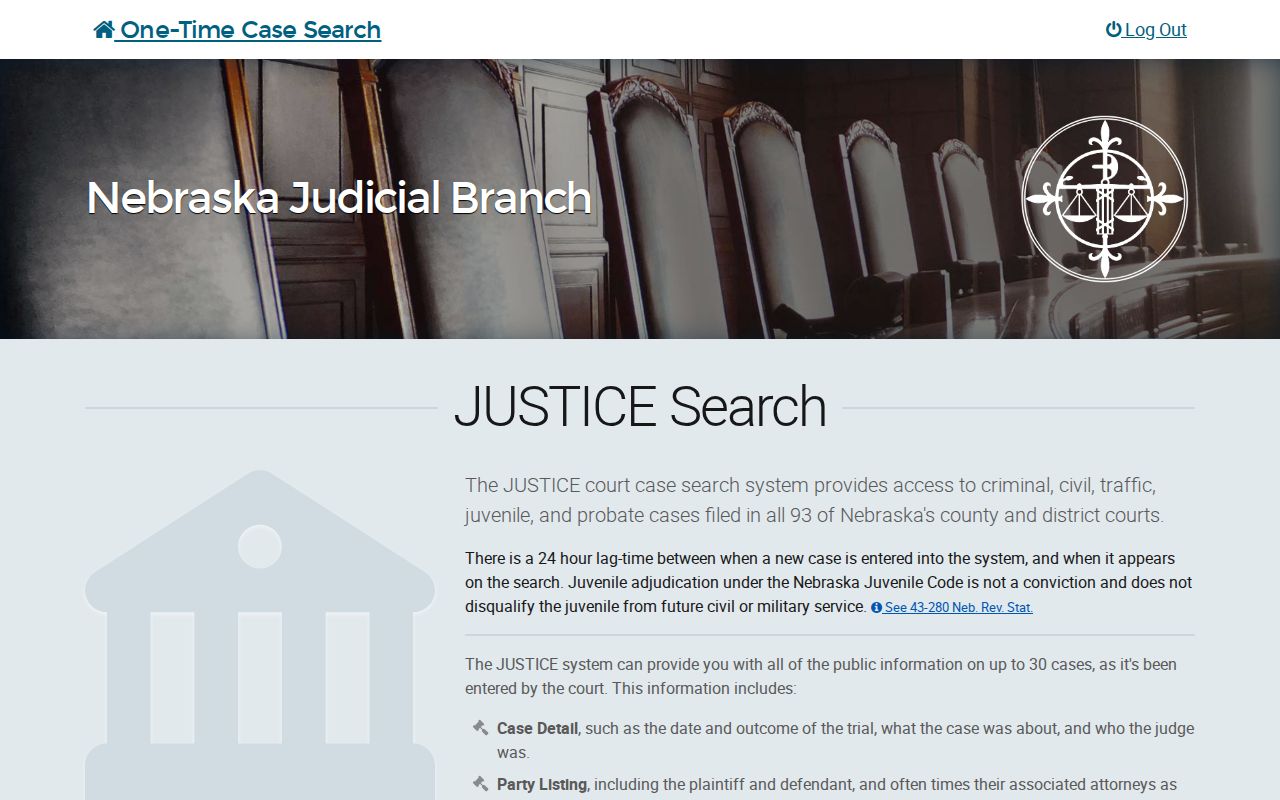
For a family or estate question, record the case number and ask the clerk about the precise public file or copy route.
Lincoln Vital Record Limits
Nebraska vital certificates are not a general living-person name index. DHHS keeps birth, death, marriage, and dissolution records, but Title 174 rules require a proper purpose, identity, and often relationship proof. Current listed fees are $17 for a birth certificate and $16 for death, marriage, or dissolution. Genealogical release can become available after a person has been deceased for at least 50 years.
A probate file, obituary, cemetery volume, or directory entry may first establish the date or family connection needed for a lawful request. The Nebraska vital-record request service states its application choices and proper-purpose warning.
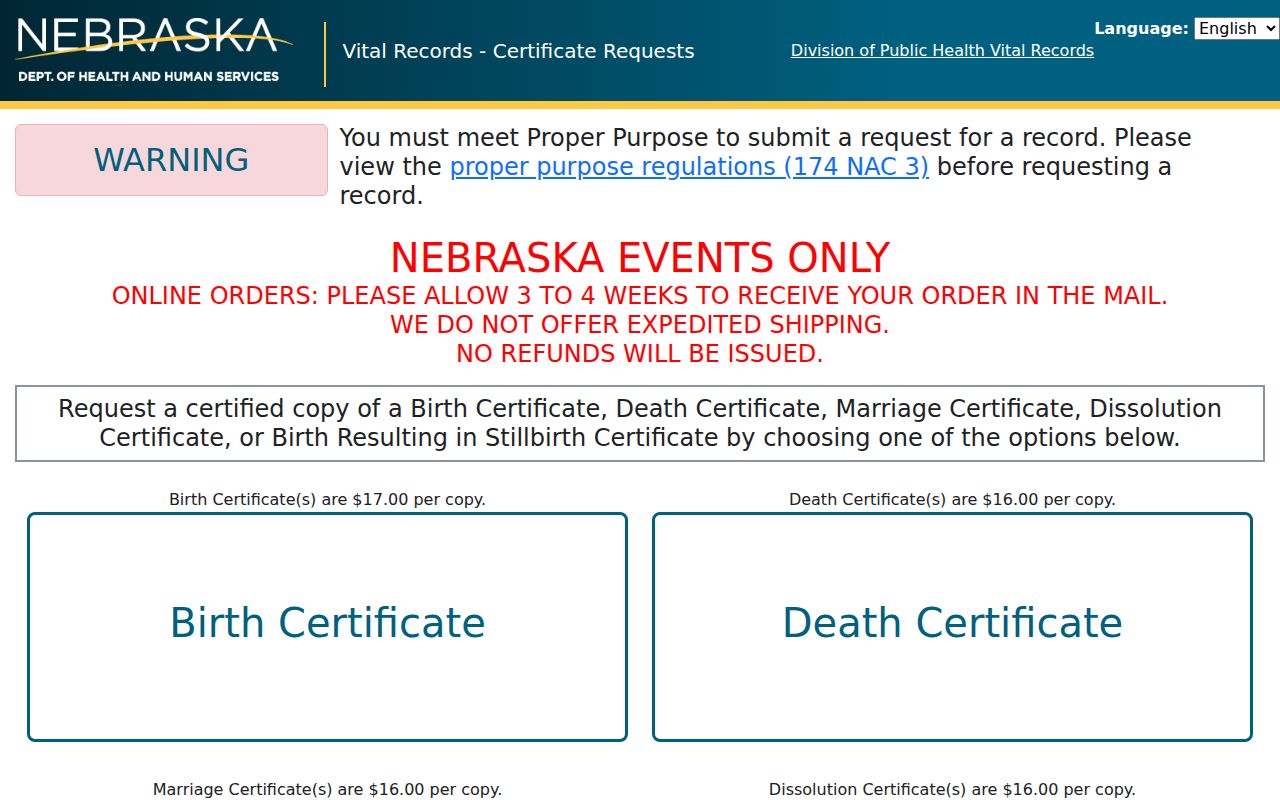
The request route is useful only when its identity, purpose, and eligibility requirements fit the record sought.
Lincoln Records Request Fallback
When a portal does not contain the needed item, send the request to the office that holds it. Lancaster County's request hub routes court, assessor/register-of-deeds, and county-clerk records separately. Lincoln city requests go to publicrecordsrequest@lincoln.ne.gov or the City Attorney office route. Nebraska Public Records Statutes, especially Neb. Rev. Stat. §84-712, require access, a legal denial, or an explanation and estimate within four business days.
Ask for a named record, date range, address, instrument number, or case number. A narrow request helps a custodian locate material without becoming an informal request for protected personal information.
Lancaster County's records-request hub shows the local routing choices.
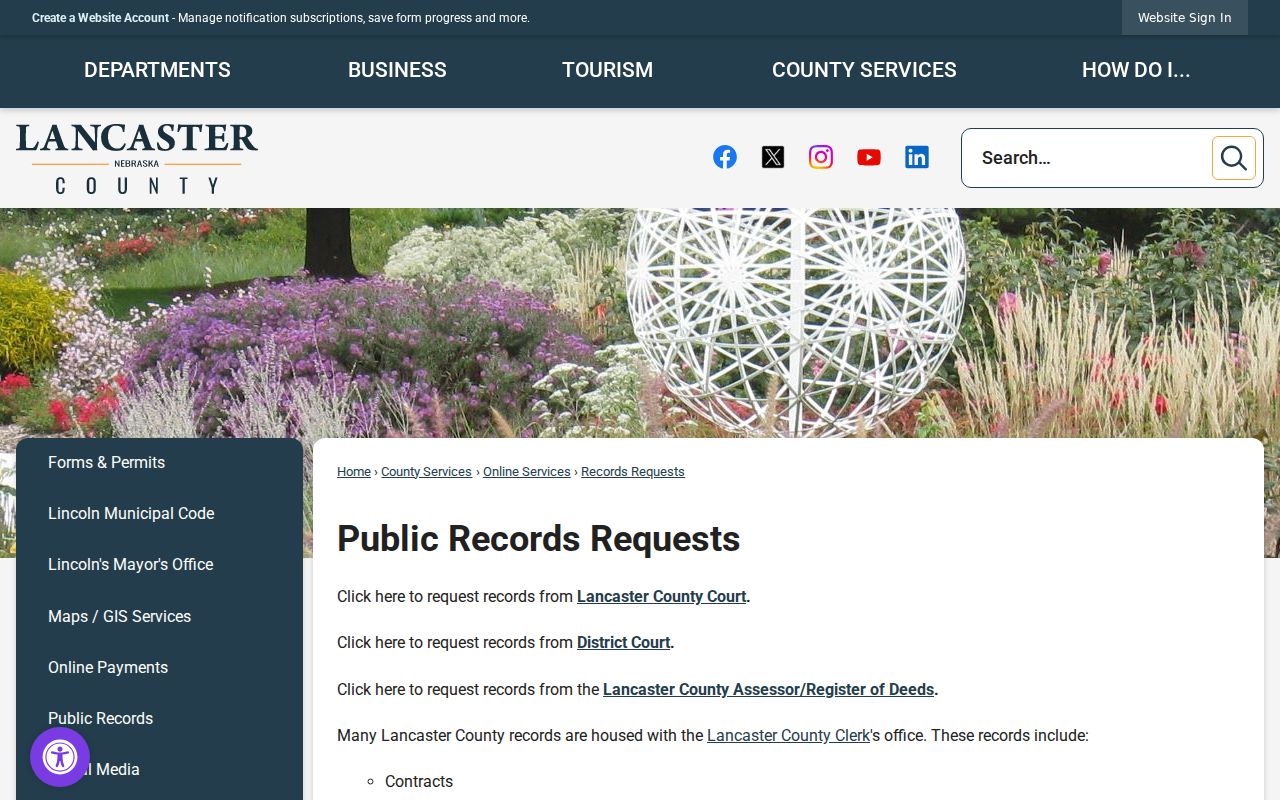
Use the listed custodian and identify the item sought before asking about fees or delivery.
Historical Lincoln Resident Directories
For an older Lincoln household, city directories add the dated address layer that current parcel records cannot supply. The local collection begins in 1873, and the H.S. Robinson guide describes a practically complete 1873 to 1941 run. Bennett Martin holds directory material on microfilm and in local-history collections, with broader year coverage that includes gaps. An alphabetical entry may show a name, spouse notation, directory notation, and street address. A reverse, or criss-cross, section starts with an address and points back to occupants.
- Roll
- A list maintained for a defined public purpose, such as assessment or voter registration.
- Index
- A finding aid that points to a record, instrument, or image rather than proving every fact on its own.
- Criss-cross directory
- An address-first directory section used to locate an older household by street number.
- Parcel
- A defined piece of land identified by the county PID and legal description.
A directory year is a snapshot. Pair it with the census, newspaper notices, deeds, or maps before drawing a longer timeline. The deeper collection and reading method are available through the Lincoln city directories.
Lincoln History Resources at Bennett Martin
Bennett Martin's Local History Resource Hub opened in 2024 and brings together directory volumes back to 1873, digitized Lincoln Public Schools yearbooks, newspaper databases, genealogy tools, and Sanborn property resources. That mix is useful when a current record trail ends at an older address. The library adds historical context that a court, deed, or assessment search was never designed to carry.
History Nebraska's Potter Research Room holds government records, maps, books, newspapers, photographs, and microfilm. New digital microfilm scanners were added there in the 2025-2026 period. Choose the shelf, scanner, reference request, or online portal based on the era of the Lincoln question, not merely on whether a name search gives a quick result.
Lincoln Address Privacy Safeguards
The official trail has real limits. A property record can identify an owner but not every person connected with an address. Voter systems withhold confidential and private information. DMV personal information is not a public address substitute, and utility customer lists are not a public residents directory. Sealed and juvenile court records are not ordinary search results. An absence can be a privacy protection or coverage limit, not an invitation to infer facts.
Nebraska's Address Confidentiality Program provides a substitute mailing address and mail forwarding for qualifying survivors of abuse, sexual assault, or stalking. The Secretary of State ACP information explains its official route. Treat protected addresses and names with care, and rely on the relevant custodian when a legitimate question remains.
Lincoln Safety Searches Have Limits
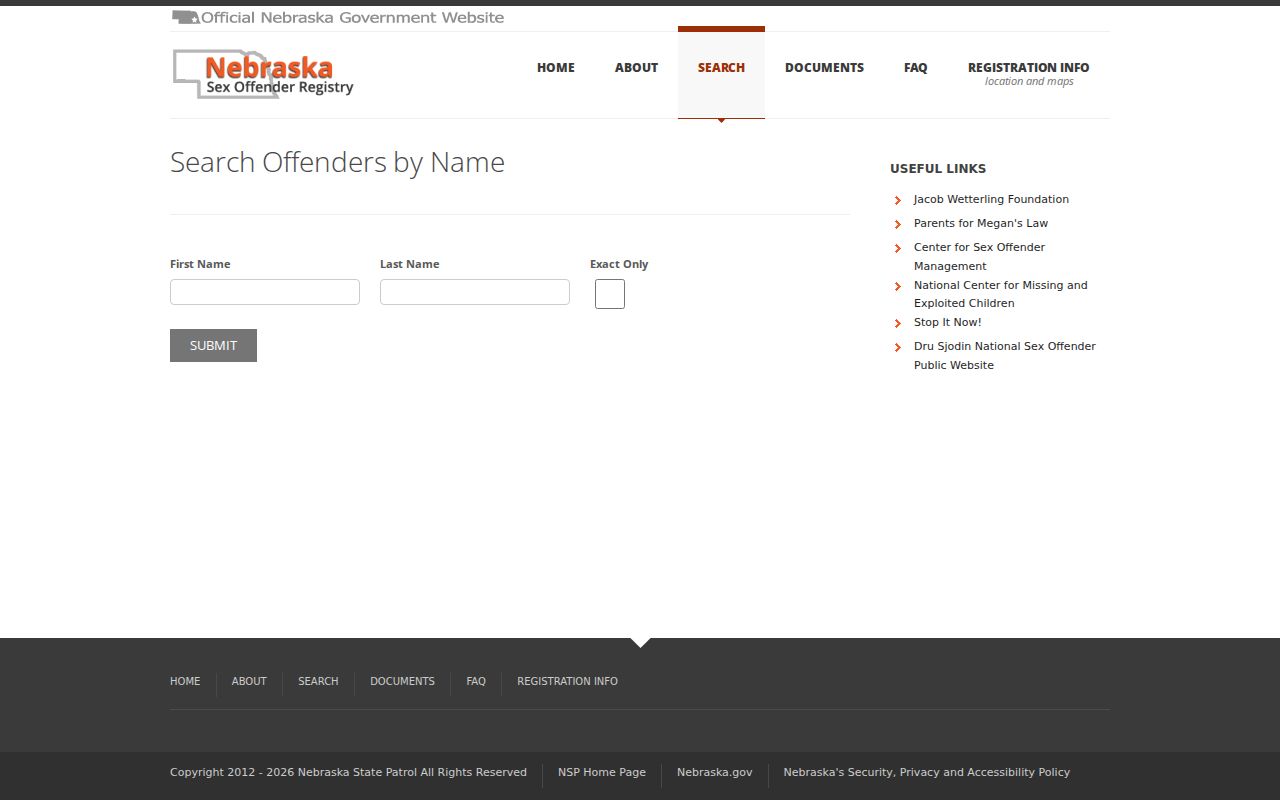
The Nebraska State Patrol registry has separate name, region, and location search modes. Its public notice is for community awareness and constructive safety planning, not a general Lincoln residents directory. The Lancaster jail roster is also a narrow current-custody record and warns that entries can contain errors and do not establish guilt. Use each source only for its stated purpose and never as a substitute for the responsible agency's record.
Search modes matter here. A registry name search is not a historical directory, and a location search does not show every person living nearby. The jail roster covers the adult detention facility, not youth matters or every person held by another agency. If a record raises a legitimate public-safety question, save the source name and date, then contact the relevant agency rather than repeating an unverified result. The official caution is part of the record's meaning, not a minor note that can be discarded after a name appears.
The State Patrol registry name search shows its first-name, last-name, and exact-only controls.
Respect the registry warning: threats, harassment, and retaliation against registrants or families are unlawful. Check updates with the official agency before relying on an entry. Sources can change without notice.