
Lincoln Previous Residents by Era
Past residents are best approached as an address history. Lancaster County's current parcel record establishes the present parcel identification number, situs address, current owner, tax mailing address, and legal description. From there, an earlier instrument can identify a seller and buyer. Annual directories and census schedules add the household layer, while maps and permits explain the building and address. The first source to use depends on the era, and no single row below is proof of uninterrupted occupancy.
| Source | Years It Covers | Where Held | What It Shows |
|---|---|---|---|
| Electronic deed index | June 19, 1987-present | Tyler Register of Deeds search | Grantor, grantee, instrument, and recorded-chain lead |
| Pre-1987 deed and index books | Before June 19, 1987 | Register of Deeds book/page archives and microfilm | Handwritten index and earlier instrument route |
| Lincoln city directories | Most years 1873-present; microfilm 1873-1972 | Bennett Martin and related collections | Address, household notation, work, and reverse-section clues |
| Federal census | 1870-1940 publicly released | Library databases, FamilySearch, and Census resources | Household composition and address geography |
| Sanborn maps | 1883-1962 | Lincoln City Libraries | Building footprint, materials, use, and block context |
| Occupancy and permit records | May 1, 1999-Jan. 18, 2013; later Accela | Lincoln Building and Safety | Address-based project and permit chronology |
| Municipal building drawings | About 1906-1960s | History Nebraska RG301 | Construction and addition plans |
| City voter registration | 1915-1924 | History Nebraska RG301 microfilm | Voter and address-era lead |
| District court records | Journals 1868-1973; earlier case series | History Nebraska RG207 | Parties, judgments, probate, and legal-address clues |
| Lincoln newspapers | 1867-present by title | Bennett Martin and online databases | Obituaries, sales, moves, and legal notices |
| Cemetery and burial sources | Fairview 1864-1999 | FamilySearch, library volumes, and cemetery offices | Death, burial, and relative endpoint |
Use a deed or assessor result for an ownership question. Use a directory or census for a household question. Sanborn sheets date a building, not the people connected to it. Obituaries, cemetery references, probate files, and a recorded transfer can mark the end of a person's local trail.
Start a Lincoln Address with Orion
The Lancaster County Property Search, known as Orion, is the practical start for an address that exists today. Search by owner, address, parcel, city, ZIP, neighborhood, subdivision, block, lot, property type, or status. Read the situs address separately from the mailing address. A mailing address identifies where a tax statement goes, which can be a business, family member, attorney, lender, or an out-of-area address, so it is not proof that its recipient lived at the parcel.
Save the PID and legal description before turning to historical material. A PID is the county parcel identifier, not the street address. The legal description can name the subdivision, block, lot, tract, section, township, range, or metes and bounds. It gives an older deed a stable point of reference when a street number was changed or never printed on the instrument.
Note: Orion quick search can match a word in a legal description, so use advanced fields when a narrow address result matters.
Lincoln Past Residents and the Deed Chain
The recorder's index follows recorded transactions, not daily residence. Begin with Orion's current owner, PID, situs address, and legal description. In the Tyler Document Search, find that owner as a grantee or grantor and narrow the results by date, document type, or legal description. The most recent purchase deed ordinarily points to the person who transferred the property. Search that prior person and the same legal description to continue backward.
- Copy the current parcel's owner, PID, situs address, and complete legal description from Orion.
- Search the current owner in Tyler as grantee and check the transaction's recording date, type, and reference fields.
- Record the grantor, the person transferring the instrument, then search that person as a grantee for an earlier acquisition.
- Keep the legal description and lot or block constant while repeating the seller-to-prior-buyer sequence.
- At the electronic cutoff, take the book, page, subdivision, or section reference to the handwritten-index and microfilm route.
The recorder search help documents grantor, grantee, combined-party, instrument-number, date, exact-match, advanced, and wildcard controls.
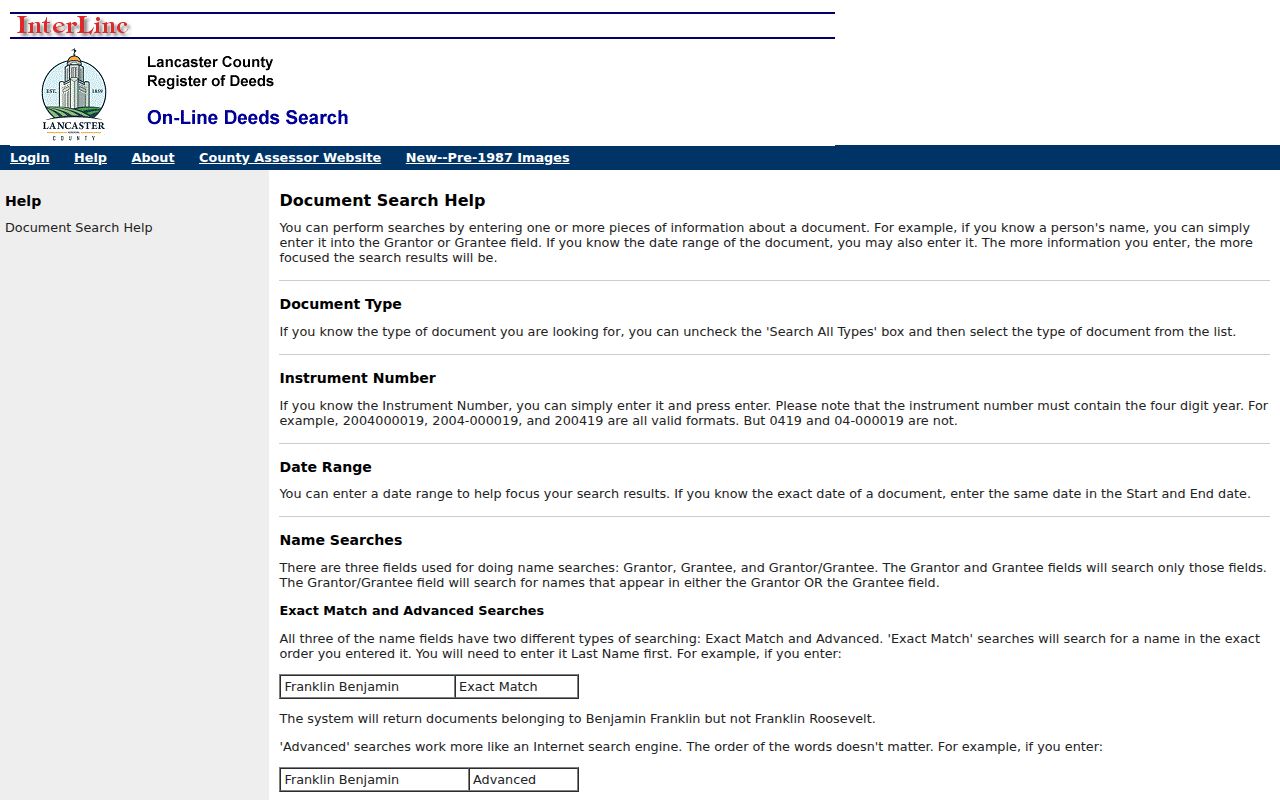
Those fields let a researcher narrow an index result, but an index entry confirms a recorded transaction or encumbrance rather than who occupied an address.
Lincoln's 1987 Index Divide
June 19, 1987 is the decisive access line in a Lincoln address history. Electronic indexing begins on that date. Post-1987 document images are available to registered users, while the county directs earlier research to handwritten index books, book/page archives, and microfilm. A failed modern name search on the older side of the line is not evidence that the transfer did not occur.
The Register of Deeds portal identifies the electronic-index cutoff and its public search entry point.
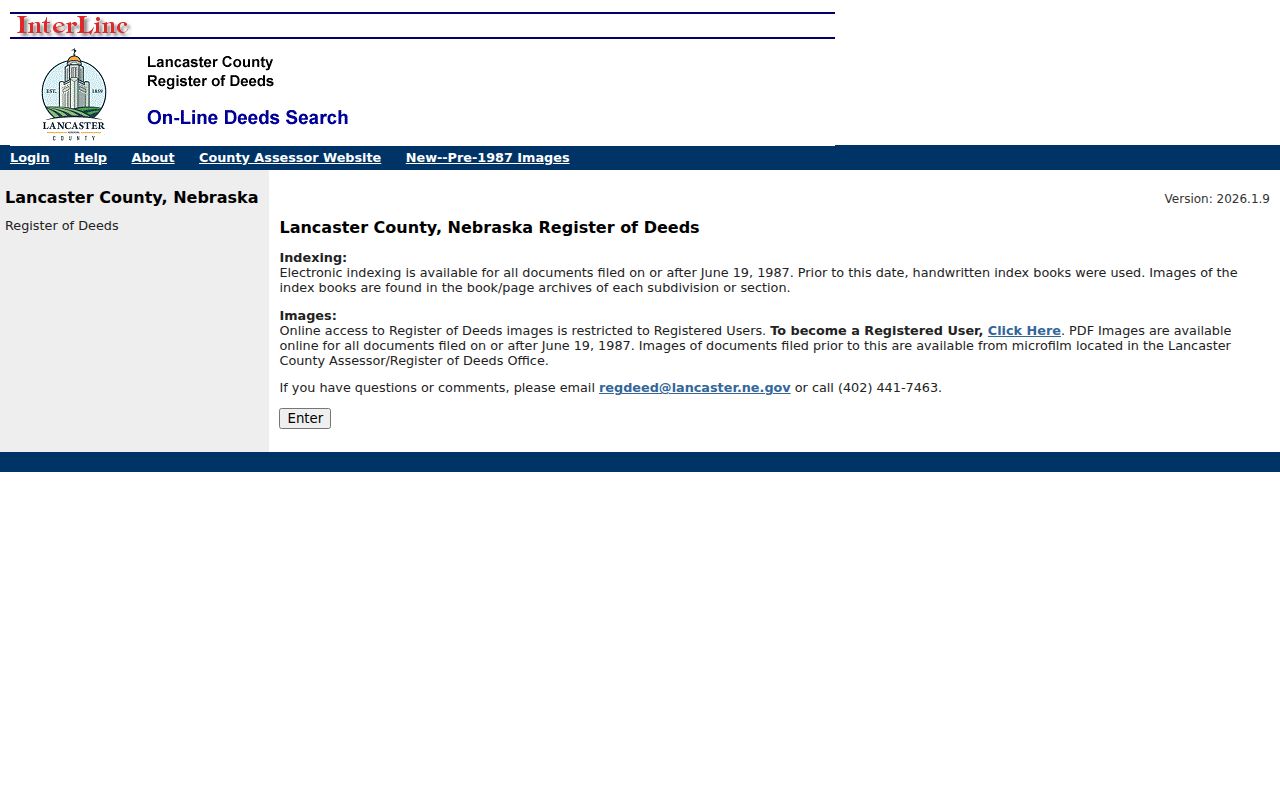
The portal is the starting interface for newer records; older instruments require the book-page or microfilm continuity path.
The county keeps the earlier instruments even though their search method differs. Use the county office, its archive references, and microfilm rather than attempting to convert every old street address into a current name-only search.
Lincoln Past Resident Deed Terms
Three terms keep the backward process clear. They describe a recorded ownership trail, not a guarantee that an owner was a resident. A conveyance can also include an estate, trust, business, lender, or other party. Read the instrument and the parcel context before attaching a person's name to an address history.
- Grantor
- The party transferring an interest in the recorded instrument, often the seller in a deed transaction.
- Grantee
- The party receiving that interest, often the buyer named in a deed transaction.
- Chain of title
- The sequence of recorded transfers and references that links one owner or interest holder to an earlier one.
- Legal description
- The lot, block, subdivision, tract, or other land description that ties an old instrument to land even when the street address changed.
Past Lincoln Residents in Directories
After the deed chain identifies an era, annual listings can test who lived there before. Lincoln directory holdings cover most years from 1873 forward, with an 1873 to 1972 microfilm run and broader 1876 to 2023 holdings with gaps. The reverse or criss-cross section sorts a street by address, then lists the people associated with that location. Search the alphabetical section too, because the address-order section and the name section serve different purposes.
The Bennett Martin Local History Center is the documented access point for those local directory, newspaper, yearbook, genealogy, and Sanborn resources.
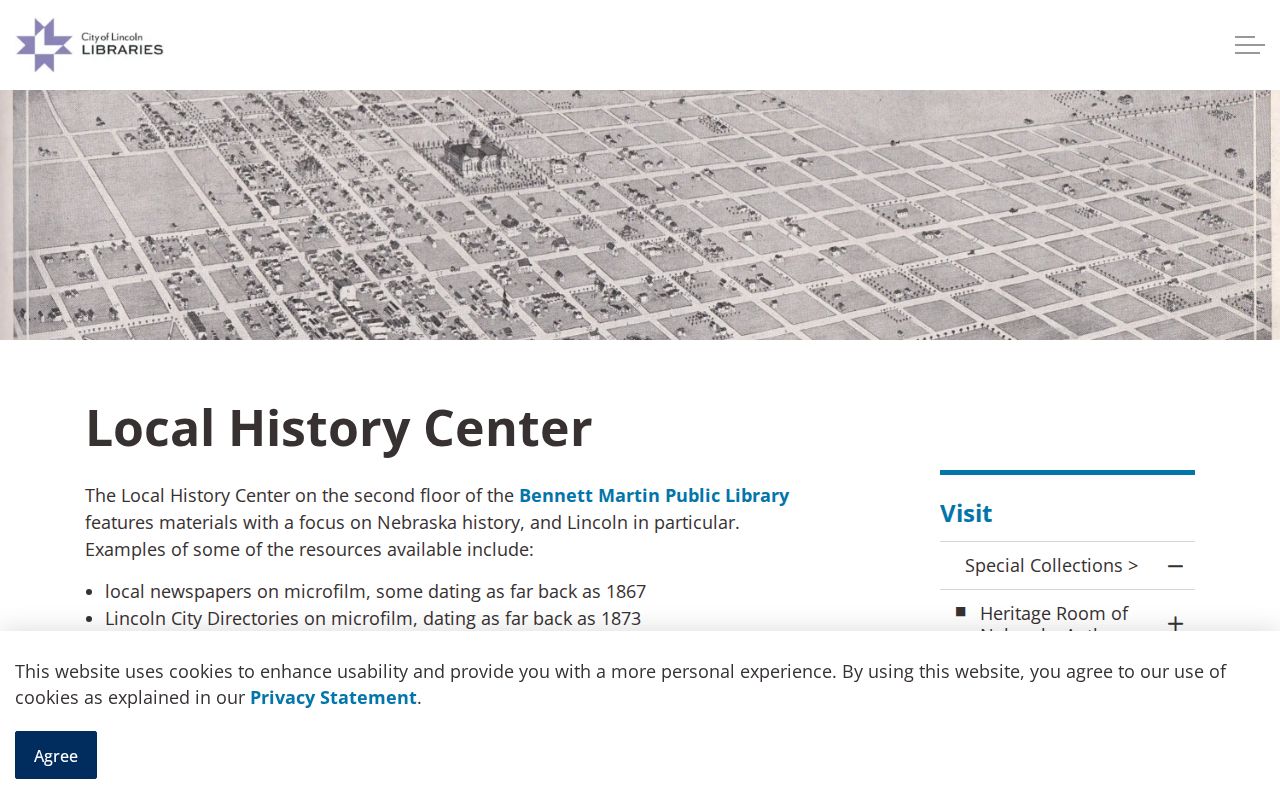
The center provides the needed companions when a directory entry points to a move, obituary, building change, or an old street name.
- Choose a directory year close to the deed or census date already identified.
- Look in the address-order section for the street and number, then copy every name exactly.
- Check the alphabetical entry for the same names, noting spouse notation, work, and any changed address.
- Compare the years immediately before and after the listing to identify a move, omission, or changed household.
- Use a newspaper, probate file, cemetery reference, or deed to test a suspected transition.
The historical runs themselves are described in the Lincoln city directories collection; the purpose here is to place a selected volume in one address's backward trail. H. S. Robinson's guide describes a practically complete Lincoln run from 1873 to 1941 and includes a street-name key useful for an address change. Directory research is generally an in-library task, while Bennett Martin also offers some reference-by-mail or email copying for long-distance research, subject to its Ask a Librarian fees.
Lincoln Previous Residents and Census
Census schedules add people who may not appear as a deed party. Pair directory years with publicly released federal census schedules from 1870 through 1940. Compare the address geography, names, ages, birthplace, and household composition, then preserve uncertainty where the address is not exact. Census years are spaced apart; an annual directory can help distinguish a move from a decade-long absence.
Lincoln City Libraries offers Ancestry Library Edition inside its facilities. Telephone directories can also help, but their coverage is described differently in two library handouts: one gives 1928 to present and another gives 1904 to 2022. Treat a telephone book as an additional clue, not a replacement for a city directory or census schedule.
Hoye's 1891 directory can be checked as an original scan through UNL Digital Commons.
Reading the scan with nearby directory years prevents a single historical name from carrying more certainty than it deserves.
Lincoln Addresses After University Place
Historic geography can break an otherwise careful search. University Place agreed to annexation in 1926, and street and address changes followed in 1927. College View was annexed in 1930. A name or address that disappears around those transitions should be checked against old and new street names, historic city limits, plats, and the Robinson directory street-name key before the address is declared lost.
Sanborn maps cover Nebraska property and land-use context from 1883 to 1962. They can show the building footprint, materials, stories, outbuildings, fire walls, street labels, and use of a block. They do not identify past residents. Compare a map change with a directory, permit, newspaper, and deed rather than treating the map as an occupancy record.
Note: A legal description is usually more durable than a street number when an annexation or renumbering changed the address.
Lincoln Past Resident Trail Endpoints
Records often end with a transition rather than a clean final entry. A directory's widow notation may lead to an obituary, cemetery record, probate case, or a deed transfer. History Nebraska's county-government records include Lancaster district-court journals from 1868 to 1973 and case-file series for earlier periods, while local newspapers reach back to 1867 by title. Those sources can help establish an estate, heir, sale, or departure date.
History Nebraska's Potter Research Room at 1500 R Street is another access route for government-record microfilm and finding aids. The room added two digital microfilm scanners in the 2025-26 period, a useful improvement when an older instrument or docket has no modern online name search. Staff, the index, and the correct reel or finding aid remain part of the process.
Building evidence offers another branch. The Lincoln permit system serves later permit research, and History Nebraska's municipal finding aid describes building drawings from about 1906 into the 1960s. The legacy occupancy search covers May 1, 1999 through January 18, 2013, with later permits directed to Accela. Project records can date work or an application; they do not establish that a named party lived there.
Recent vital records have separate access rules. The Nebraska DHHS vital-records office lists online requests, application forms, mail, and in-person channels. Under Title 174, it requires proper purpose, and genealogical access generally requires proof of death at least 50 years earlier. Use records for family history, estate research, or personal address history. Do not use a name or address trail to harass, stalk, or harm anyone.